Showing posts with label magnuson park. Show all posts

Tuesday, January 28, 2020

City Taking Comments On Proposed Sand Point Cottages Proposal At Magnuson


A neighbor would like to share that the City is taking comments on  Sand Point Cottage Project (22 cottages) planned for the south side of NE 65th Street, just east of Sports Field Drive NE and adjacent to Magnuson Park. Parking for six vehicles is proposed.

The Low Income Housing Institute website says:
The Low Income Housing Institute (LIHI) is developing a Sand Point Cottage Community projected to open in the Spring of 2020 in Magnuson Park. This project will provide 22-25 studio and one-bedroom cottages of affordable workforce housing for families and individuals employed at low wages. The cottages will have living and sleeping areas, lofts, kitchens and bathrooms. The community will include a common building, community garden, outdoor recreation space and walking paths. 
The vacant property is owned by the city of Seattle at 6343 NE 65th Street. It is zoned Low-rise 3 and is within the residentially zoned portion of Magnuson Park. LIHI will master lease the land from the Seattle Office of Housing. The cottages will be built modularly off-site by students in pre-apprenticeship and vocational training programs, and assembled on-site by a general contractor.

Go here for more information.


Friday, June 1, 2018

Take A Virtual Park Tour


Seattle Parks and Recreations offers "virtual park tours" on its website, including nearby Magnuson Park and several others.

The information says:
Dreaming about your next urban adventure and want to see what our wonderful park lands have to offer? Try out our parks virtual tours provided via Google Maps.  
Last year we partnered with Google to borrow the trekker camera to capture trails, gardens, and viewpoints across the city.


Go here for more information.

Thursday, May 10, 2018

Sunday Magnuson Park Bird Walk


The Seattle Audubon Society is holding a Bird Walk on Sunday from 9-noon at Magnuson Park. The leader is Jan Bragg.

The information says:
Magnuson Park offers a variety of habitats, including ponds, forest, fields, and a lake shoreline. This outing is suitable for beginner or intermediate bird-watchers, including children accompanied by an adult.  
We will walk uphill and down, searching for birds and bird nests along the way. Songbirds will be singing for those wanting to practice birding-by-ear skills. Migrants may be about. 
And we’ll be celebrating mothers: Ducklings should be present, so we will study mothering skills when we find them. If we are lucky enough to find an active bird nest, we will try to observe mothering there as well.  
For those collecting pledges for Birdathon, and trying for 50 species, we may need to go to alternate sites (e.g. Montlake Fill, Matthews Beach?) afterwards. 
Birdathon Donation is $15.  
Meet at the Education Pavilion (west side of boat launch parking lot E-1, at the end of drive, on the right, after entering the NE 65th St entrance).


For more information go here.

Thursday, February 8, 2018

Tonight Seattle Parks Board Meeting At Magnuson Including Update On Building 2 Hangar Redevelopment


A neighbor would like to let the Community know that tonight  the Seattle Board of Park Commissioners is holding their monthly meeting at the Cascade Bike Club in Magnuson park, rather than the usual downtown location.

The neighbor shared that generally the public is allowed to give comments at the start of each meeting.

The volunteer board advises the City regarding policies for the planning, development and use of the City's park and recreation facilities.

The agenda includes a briefing and discussion on Magnuson Park Building 2 Redevelopment, the former aircraft Assembly and Repair (A&R) hangar, which includes two hangars, workshops, and offices totaling about 140,000 –144,000 square feet.

The neighbor added:

I assume the reason for tonight's meeting being at Magnuson is to give commissioners a chance to look at Building 2 before the meeting because of it being an agenda item.    
It costs the Department quite a bit to keep the building and it keeps looking for alternatives.  So far no one has come up with a workable plan for it, yet it would be difficult to demolish due to landmark status and environmental concerns.


Seattle Parks Building 2 Prospectus states about Building 2:

SPR previously conducted a Request for Proposal (RFP) process that yielded two finalists. However, both development plans lacked sufficient financing to move forward. Both are open and potentially interested in adding partners to their projects.  
There are additional opportunities to redevelop adjacent structures on Building 2 parcel, including former steam plant (Building 12) 
SPR will review and evaluate: •Proposed uses and activation of Building 2, ensuring alignment with SPR mission, Magnuson Park plans, and the Magnuson Park 2012 Strategic Plan. •Intent to develop building for recreation, arts or cultural activities in keeping with the National Park Service covenant on the building. •Demonstration of measurable public benefit.

For more information go here. 


Monday, November 13, 2017

Tomorrow Bird Walk At Magnuson Park


The Seattle Audubon Society is having a bird walk tomorrow from 9-11am at Magnuson Park, led by Joe Sweeney.  

Participants are to meet at the Promontory Point Pavilion, a red-metal-roofed structure next to the little drive-in road at the west edge of parking lot E-1. 

Go here for more information. 

Tuesday, July 25, 2017

Outdoor Movies Begin At Magnuson Park Suddenly Cancelled For Safety Reasons


Outdoor movies at Magnuson Park has been cancelled for the rest of the summer.

Epic Events sent out this information:  

The Outdoor Movies at Magnuson Park series in Seattle has been cancelled for 2017 due to security concerns that have evolved into public safety issues at Magnuson Park. This includes previously scheduled events on Thursdays; July 27, Aug. 3, Aug. 10, Aug. 17 and Aug. 24
Epic Events would like to thank all of their fans, sponsors and partners who have supported and enjoyed these events over the last six years. A variety of venues will be considered for the continuation of this series in 2018 and beyond.

The Facebook page says:
Due to security concerns that have evolved into public safety issues at Magnuson Park, we feel that it is in the best interest of our attendees, staff, sponsors, partners and fans that we no longer continue these events in 2017.
Please check back for update on future events and locations.

KIRO reported that Epic President, Doug Borneman, told the news station by phone that "there were numerous incidents on Thursday, July 20th, and that thefts and violence occurred."

The report continues saying that "Online records show that Seattle Police took a robbery report that night, but the report did not provide any details."


The outdoor movies have been held for the last six years on Thursday evenings for $5 and also included various food trucks, entertainment and trivia.

Epic Events also runs the Movies@Marymoor Park in Redmond and two other outdoor movie events in Bellingham and Spokane.

(graphic courtesy of Facebook page)


Friday, May 26, 2017

Original Sand Point Park Renamed Magnuson Park 40 Years Ago


History Link published this information on Magnuson Park naming and history:


Seattle's Sand Point Park is renamed Warren G. Magnuson Park and officially opened on May 29, 1977

                                   
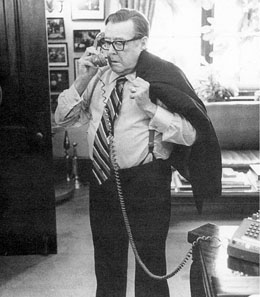
Warren Magnuson at the twilight of his 48 year career
(courtesy UW Special Collections)

On May 29, 1977, Sand Point Park is renamed Warren G. Magnuson Park and officially opened before cheering supporters and glum picketers. Senator Magnuson (1905-1989) tells the crowd that a $700,000 federal grant to build new facilities won approval the previous Friday.
In addition to Senator Magnuson, Mayor Wes Uhlman (b. 1935) and City Councilwoman Jeanette Williams (1914-2008) were guests of honor. Both had both worked to create the park and to close down the existing airport at the site.   
Picketers criticized the closing of the airport and the location of the National Oceanic and Atmospheric Administration's (NOAA) Western headquarters nearby. It was also considered unusual to name a park for a living person.   
The Navy had declared the land at Sand Point surplus. Part of the land (100 acres) became the Western headquarters of NOAA. Another 195.6 acres land became Warren G. Magnuson Park.


HistoryLink.org, was created by Washingtonians whose mission it was to create the first and largest on-line encyclopedia of state history, which is continually evolvingAs of May 2017, HistoryLink.org features more than 7,000 original fully sourced articles.

For more information about History Link go here.

Wednesday, September 21, 2016

City Public Hearing On Off-Leash Parks Tomorrow


A Blog reader would like to pass along that on Thursday evening, the  Board of Park Commissioners is holding a Public Hearing on the People, Dogs and Parks Strategic Plan at the Miller Community Center at 6:30pm. 

The closest off-leash park to Laurelhurst is Magnuson (7400 Sand Point Way).

The information provided by the City says:
The plan will guide the operations of existing off-leash areas, and provides strategies for development of future off-leash areas. It provides direction on how to spend Seattle Park District funding designated for existing off-leash areas over the six-year term of the Park District funding plan (2015-2020).
Seattle currently has 14 fenced off-leash areas totaling 28 acres. The People, Dogs and Parks Plan offers recommendations on how to add new off-leash areas, and how to improve off-leash area conditions and user experience.  
New off-leash areas may be added through new park development, existing park redevelopment and community requests, on park land or non-park public land. All new off-leash area proposals will be reviewed by a committee of environmental and dog advocates, community members, animal behaviorists and Parks staff, who will make a recommendation to the Parks and Recreation Superintendent.    
The Plan recommends that future off-leash areas be fenced, does not recommend allowing unleashed dogs on trails, and recommends against establishing more off-leash areas on beaches. User conflicts, limited enforcement and maintenance resources, and environmental concerns limit the capacity for adequate management of unleashed dogs in city parks outside of fenced off-leash areas. 
The plan proposes the use of Seattle Park District funding to improve existing off-leash areas based on site assessments included in the plan and to explore possibilities for partnerships and sponsorships to expand resources. It also proposes the creation of a license for dog walkers, and limiting the number of dogs in a dog-walker pack to three unless dog walkers complete an approved animal behavior training program. 

Those who want to give input on the plan but are not able to come to the meetings can give written comments, which bear equal weight to verbal comments. Email comments to rachel.acosta@seattle.gov

Thursday, June 2, 2016

Free Touch A Truck Event At Magnuson On Sunday

 touch-a-truck banner


The 6th Annual Touch-A-Truck event is happening on Sunday from at Magnuson Park from 10-1pm. 

The Junior League sent this information:
The event offers children a hands on opportunity to explore working trucks of all types, as well as meet the people who build, protect and serve the Seattle community. 
Trucks on display include construction trucks, emergency vehicles, vintage trucks, and more. 
Children of all ages are invited to creatively explore the trucks with guidance from the respective professionals who will explain the equipment and discuss the work each performs. 
The event will also includes activities such as face painting, coloring activities, giveaways, and an ice cream truck.

Thursday, May 12, 2016

Check Out New Magnuson Park Pump-House With Unique Aerosol Art Mural


A Laurelhurst Blog reader sent this information saying:
I thought you and readers might find the new Western Fisheries Research Center Pump House interesting, especially those who walk at Magnuson or who appreciate art.

It is at the south end of the park about 100 feet inland (feet east of the Straight Shot art work)from the lake shore and south of parking area E1 (south of the boat launch). That parking area can be reached by entering the park on NE 65th St. and driving about a half mile.  Other ways to get there would be by following the paved walkway which runs parallel to the lake shore to the south end of the park, or by entering the park via the gate on 65th Ave. NE and walking eastward along the the old service road on the park's south fence line. 
The mural on the walls is aerosol art.  If you Google Jeff Jacobson the artist a Wikipedia article, other articles, and some video about his work can be found.  I think it adds quite a bit to other public art in the Park, on the adjacent NOAA property, and also to private art in the Building 30 gallery.


Here is a news release from the USGS Newsroom:
 

New Pump-house in Magnuson Park Provides Water for Scientific Research, Wetlands, Wildlife and Recreation

SEATTLE –The U.S. Geological Survey announced the completion of its new Western Fisheries Research Center pump-house structure in the southeast part of Magnuson Park in Seattle. The pump-house provides water for scientific research, nearby wetlands and associated wildlife and recreation.
The pump-house brings in water from nearby Lake Washington allowing USGS’ fisheries center to conduct research in its wet lab facilities.
“Thank you to the USGS for their work to improve Magnuson Park for visitors and wildlife through the thoughtful design and construction of the new pump house,” said Seattle Mayor Ed Murray. 
In the early 2000s, new regulations, safety concerns and pump wear-and-tear indicated that a new pump-house was needed. USGS worked together with the City of Seattle Parks and Recreation Department, Magnuson Environmental Stewardship Alliance and other interested parties to come up with a plan that would allow the construction of a new pump structure, while improving the park for both wildlife and visitors.
"USGS has been a good neighbor in the past by providing water for wetlands construction, improving wildlife passage and aesthetics, and by helping restore park land adjacent to their WFRC,” said Tom Kelly of MESA.
The coordinated effort involved a design for the new pump-house, which serves a pipeline underground through an easement to USGS, and directing cleaned water from WFRC into the Magnuson Park wetlands. Since the project required removal of some trees and vegetation, USGS also invested in restoration and mitigation efforts. The pump structure needed to be an above-ground structure, so the USGS had local Seattle artist Jeff Jacobson create an environmentally themed mural on its walls and local interpretive designer and illustrator, Denise Dahn, provide educational signage near the structure and associated wetlands. 
“This piece has a sort of hyper-wildlife feel, where you celebrate and connect with wildlife,” said Jeff Jacobson, the mural artist. “I may live in downtown Seattle, but I love nature and am happy that people can come to the park, experience this piece, and enjoy nature along the way.”
The wetlands in Magnuson Park—receiving year-round water from the USGS WFRC—provides habitat for a multitude of wildlife species, including waterfowl and other birds, frogs, insects and aquatic invertebrates, and is a wonderful place for wildlife watching and otherwise enjoying nature.
“The USGS conducts cutting-edge fisheries research at this facility, this new pump ensures that vital management information is generated here,” said Jill Rolland, Director of the USGS WFRC.
The USGS WFRC, located on the south side of NE 65th St., is one of 17 ecosystem-focused USGS science centers across the United States, and one of only two USGS science centers that focus exclusively on fisheries science. The WFRC focuses on critical natural resource issues facing the nation and provides impartial science to managers of fish and aquatic resources in the western United States.  
Magnuson Park was once a U.S. Navy airfield and later transferred to the City of Seattle and other state and federal agencies. It is the second largest park in Seattle and is continually transforming to provide a unique combination of enjoyable features and activities including boating, tennis, swimming, walking, sports fields, and nature and wildlife watching in an urban setting.


Tuesday, December 8, 2015

Audubon Socity Bird Walk This Morning At Magnuson


The Seattle Audubon Society is having a morning bird walk at Magnuson with Leaders, Joe Sweeney and Mike Freund.

The information says: 
Magnuson Park offers a variety of habitats, including ponds, forest, fields, and a lake named after a president. This outing is very suitable for beginner bird-watchers.  
We will walk 2-3 miles on mostly level terrain, searching for birds and bathrooms along the way. Bring binoculars, hat, snacks, layers, rain gear and a sense of humor. Please leave your pets at home, even if they have a good sense of humor. 
 

Meet at 8:30am at the Promontory Point Environmental Learning Center, Magnuson Park. walk is over by 11:30 am.

Wednesday, September 9, 2015

Magnuson Nature Programs Start Saturday

A Laurelhurst Blog reader sent this information in to share with the community:


http://magnusonnatureprograms.com/wp-content/uploads/2013/02/mnp-logo-horizontal-800x176-600x132.png

http://magnusonnatureprograms.com/wp-content/uploads/wysija/dividers/artcore.png

http://magnusonnatureprograms.com/wp-content/uploads/2013/02/IMG_3328-600x803.jpg

Fall Program Registration is Now Open!

We've got another lineup of great programs in store for you this fall!
Click on the links below for all the details.

Classes and Camps:

FREE Native Bee Identification and Monitoring class (ages 8 and above with parent) on Saturday September 12th from 12:30- 2:30pm at Ravenna-Eckstein Community Center:  SPARC registration code:#136521

 FREE Native Bee Identification and Monitoring class (ages 8 and above with parent) on Saturday September 19th from 12:30-2:30pm at the Brig/Ravenna Room  SPARC registration code: #136245
 "Harvest Time" Nature Adventures for Tots class (for ages 2-5 with a parent) on three consecutive Tuesdays: Sept. 22nd, Sept. 29th, and Oct. 6th from 10:30-11:30am SPARC registration code: #136246
 1st time ever! "Fresh-from-the-Garden one-day class" (for ages 6-12) on Sat. Oct. 3rd from 1:00pm-5:00pm.  This will be a condensed version of our existing 2-day camp, complete with a fabulous family banquet! SPARC registration code: #136247
 1st time ever! "Nature Scouts" winter break camp (for ages 6-12) from Mon. Dec. 21st to Wed. Dec. 23rd, 9am-4pm each day.  This camp will feature winter wildlife watching with short treks out in the park, gathering materials for tool-and-craft-making and journaling, combined with cozy classroom projects! SPARC registration code: #136250

 Fall Nature Walks:
NEW! All walks are now listed on SPARC for online registration!
"Dragonflies: Tigers of the Sky" Family Wetland Walk on Sat. Sept.19th from 9:30am-12noon SPARC registration code: #138671
 "Birds of Promontory Point" walk for Lifelong Learning Program (ages 50 and above) on Thurs. Oct. 8th from 8:30am-11:30am SPARC registration code: #135502
 "Winter Waterfowl in the Wetlands" walk for Lifelong Learning Program (ages 50 and above) on Thurs. Nov. 5th from 8:30am-11:30am SPARC registration code: #135503
 "It's a Wonderful Life" Family Wetland Walk on Sat. Nov. 7th from 9:30am-12noon SPARC registration code: #138672
We still have a few spots left in our fall school field trip schedule for grades Pre-K to 3rd grade, with four different science and nature topics to choose from:
  • Life in the Garden
  • Wetland Discoveries
  • Birds of Magnuson
  • Habitat Connections
We also offer Custom Nature Walks and Custom Nature Classes for small groups, such as scout troops, campfire groups and preschools.  Visit our website for all the details, and choose your own customized nature adventure !
Hope to see you in the park!--
"More grows in a garden than is sown there." anonymoushttps://blogger.googleusercontent.com/img/b/R29vZ2xl/AVvXsEhacVNu8r5-iDUKlp1zoV0HgWM8-mZlkXGkEuCaImKLx7Uqim7Bt_1OlCvB8O1h8uYy9Cnypd7xW6QOz8ah0Zg7xESc3mmw7u7wuEBKonyb_pJlu80hPcLfgzDl34zBvmoVaeMR-a11sua5/s320/Elli%2526Troi+w%253Ascarecrows.jpgMagnuson Nature Programs
Emily Bishton, Director & Lead Educator
Sponsored by Magnuson Community Center
206-684-7026

Magnuson Children's Garden
A volunteer-led public garden, sponsored by Magnuson Community Garden and the Master Gardener Foundation of King County                                          
                                              
Would you like to receive our colorful, monthly e-newsletter? Visit our website and click on the "About" menu tab for the sign-up form!

Thursday, January 15, 2015

No Water Access At Magnuson Off-Leash Area


Seattle Parks and Recreation sent out this news release:
 
 
Toxic algae scum spotted in Lake Washington
 
As a precaution, Seattle Parks and Recreation has temporarily closed access to the water at the Magnuson Park dogs off-leash area.
 
 
Toxic algae has been found in accumulated scum in Lake Washington along the shores of the off-leash area. Toxic algae blooms are most common in the summer and fall, but can occur any time. 
King County Department of Natural Resources collected water samples and submitted them to the State Toxic Algae Program. The information was reviewed by Public Health – Seattle & King County. Tests have revealed that the toxins are currently found in the scummy algae that accumulate in some places along the shore. 
In general, people and pets should not wade or play in the lake where the scum has accumulated and dogs should not drink from the lake in these areas. If there is water contact for a pet, it is important to rinse well to remove all algae. Out of an abundance of caution, Parks closed beach/water access in the off-leash area until it is deemed safe for dogs to swim and play in the water. 
For more information on toxic algae and symptoms of toxic poisoning, please visit Washington Department of Health toxic algae website.


And Brian Judd, Manager of Seattle Parks and Recreation also shared this information:
Because of the nature of the algae blooms (they move based on wind and lake conditions), it is very difficult to determine the extent of the bloom at any location for any given time. This poster has a link to
www.nwtoxicalgae.org which is the location to go and see the most recent samples and locations. It gets updated when new samples come in. 
Until this issue is resolved, it is very important to keep your pets away from the dog beach and the water. Algal blooms that are toxic can poison animals, wildlife, and people. If your pet has been exposed to the water at the dog park, please make sure that they do not lick their fur and rinse them with clean water. Then, rinse your hands and any exposed skin. 
Blooms appear as foam, scum, or streaks on the surface of water and can be green, blue, red, or brown in color. Dogs that are exposed to toxic algae can show severe signs within minutes to hours. Watch for signals such as low energy, weakness, not eating, drooling, vomiting, diarrhea, stumbling, paralysis, seizures, or tremors. 
If your pet becomes ill, call your veterinarian immediately. Also, please report animal poisonings to your local health department. You can also notify the Washington Department of Health at: 360.236.3330.


Monday, October 20, 2014

Public Meeting Tomorrow on Radioactive Contamination Cleanup at Magnuson Park


Tomorrow from 6-9pm, the Department of Ecology is holding a public meeting at the Mountaineers, about the cleanup of radioactive contamination at Magnuson Park.

The information says:
The agencies working to clean up low-level radiation from two former naval maintenance rooms at Seattle’s
Magnuson Park will provide updates and answer questions.    
Cleanup work by contractors for the U.S. Navy has been under way since June 2013. The Navy used the rooms to repaint aircraft cockpit dials with glow-in-the-dark radium paint in the 1940s and 1950s. The Navy owned and operated an air station at what is now Magnuson Park and is responsible for cleanup of all contamination left from its operations. 
Park areas open for public use and access have undergone review and testing for contamination. Radiological contamination was found in parts of Buildings 2 and 27, both former aircraft hangars.  
Building 2 is used for park equipment storage, and has a small area used as offices by the Seattle Conservation Corps. Arena Sports, an indoor athletic facility, is located in Building 27. A former radium-painting room at Building 27 was in an annex, referred to as the south shed, separate from the sports facility. The annex and nearby contaminated grounds are fenced, locked, and closed to public access. 
The Navy is conducting its work under federal cleanup laws that apply to former and current military facilities. Washington’s departments of Ecology and Health are providing additional oversight. Health is the state’s radiation safety regulator.  
Repeated Navy and Health Department tests have confirmed that no radiation above background level – the amount of radiation naturally present in rocks and soil – is present in the Arena Sports complex. The Navy has completed its interior cleanup of the annex and plans to dismantle it this month, after Health has verified that all contamination has been removed.   
Site investigations and cleanup work continue at outdoor areas near these locations, primarily along storm drains connected to the buildings. Further phases of the Navy’s investigation will include the lake bottom in areas near the storm drain outfalls at the north end of the park.
The open house will start at 6 p.m. and  presentations will start at 7 p.m. Ecology will host presentations by the U.S. Navy, the Washington Department of Health Office of Radiation Protection, the Seattle Department of Parks and Recreation, Ecology representatives, and 46th District Representative Gerry Pollet.


 Seattle Parks and Recreation sent out this information published by The Washington Department of Health:

Radiation and Your Health - Magnuson Park

What is radiation?
Radiation is energy given off by atoms and is present in nature all around us. Everyone is exposed to radiation every day from natural sources in soil or from the sun, and you may be exposed from man-made sources like medical X-rays and smoke detectors. You cannot see, smell or taste radiation.

Is radiation dangerous?

We are exposed to natural radiation every day. Man-made radiation is an important part of modern life when properly controlled. But uncontrolled radiation can be dangerous. Also some types of radioactive materials are more dangerous to people than other types. So, it’s important to carefully manage radiation and radioactive substances to protect health and the environment. This includes finding and cleaning up areas where radiation was used in the past in order to protect people today and in the future.

How was the radiation found and measured at Magnuson Park?

At Magnuson Park, the Navy tested the area for possible contamination after reviewing historical drawings that showed a “radium room” and an “instrument room” were in use in two buildings from the mid-1940s to early 1950s. Radiation “dose” – or how much someone could receive from a radiation source – is measured with special equipment. The Rem is a unit that measures what effect radiation has on tissue. Radiation is used at different levels to do things like see the structure of a bone or – at higher levels – kill cancer cells. Dose is often shown as millirem or mrem, which is 1/1,000th of a rem: 1,000 mrem equals 1 rem.

What about the radiation that’s been found at Magnuson Park?

Radiation from earlier airplane instrument repair work by the Navy has been detected above the level that federal law requires cleanup. We believe that people have no risk of health problems from this level of radiation mainly because the public has no access to contaminated areas. These areas still need to be cleaned up because we don’t know how this property might be used in the future.
In April 2013, both the Navy and the Washington State Department of Health tested public areas of Building 27 – now Arena Sports – for radon, a gas that can result from radium. Test results found no radon gas in any public areas of the building.

Have City of Seattle employees been exposed to the contamination?

Contamination from radiation was found in part of Building 2 – now a parks storage building – and the south shed behind Building 27 – now housing Arena Sports. The contamination was found under layers of carpet, vinyl flooring, and piping, or was covered by asphalt or layers of soil. The only way contamination could seep through those coverings would be as radon gas. However tests found no radon gas was present.

Are there tests that can tell if I have been exposed to radiological contamination?

There are lab tests that can show if you have been exposed to high levels of radiological contamination. However, those tests won’t work for the levels that have been found at Magnuson Park because those levels are too low to be detected.

How bad is the contamination?

The Navy found radiological contamination in and around Buildings 2 and 27. Contaminated areas in the buildings are secured and not open to the public. The Navy’s cleanup plan is under review by the state Departments of Health and Ecology. The Navy and the Department of Health both tested several areas within the Arena Sports area for radon. Radon is formed when radium turns into a gas in the air. We found no radon in the part of the building that is open to the public.

How many people will get cancer from radiation at Magnuson Park?

We think it is unlikely that anyone will get cancer from being exposed to radiological contamination found at Magnuson Park. During the cleanup, the Navy will test the air and soil to make sure contaminated dust is not released. The Department of Health will continuously test air quality inside and outside the buildings to ensure the public is protected.

I play on the soccer field and already have health problems - could these be caused by the contamination?

We think it’s unlikely that radiation could cause any health problems because no contamination has been found in public areas of buildings 2 and 27.

I use the Arena Sports facility. Am I at risk from this contamination?

No. When the Navy tested the site in 2010, no contamination was found in the areas of Building 2 formerly used by Arena Sports or in Building 27 currently used by Arena Sports. Members of the public haven’t been exposed to radiological contamination in either building.

What are the Federal and State guidelines for the cleanup of the radiological contamination?

U.S. Environmental Protection Agency guidelines call for cleanup for any site where tests show radioactivity higher than 15 mrem per year. State Department of Health guidelines call for cleanup at or above 25 mrem per year. There is no other state guideline for radiation cleanup. The Department of Health tested several outdoor areas at Magnuson Park in April 2013 and found levels that were in the range of 4-10 microrem, which is the same as background levels of radiation. A microrem is an even smaller amount: 1/1,000,000th of a rem.
For comparison purposes, radioactivity is present in our bodies at about 29 mrem per year. Getting a chest X-ray gives us 10 mrem per X-ray. A dental X-ray is 1 mrem per X-ray. Even flying in an airplane exposes us to 0.3 mrem per hour. We’re also exposed to radiation from space, including the sun.

Will the radiological contractors get tested?

The radiological contractors wear special equipment called dosimeters that measure exposure to radiation. None of the dosimeters worn by the workers have shown exposure to radiation.

What will happen to contaminated materials after they’re removed?

Contaminated materials will be classified as low-level radioactive waste, placed in specially lined containers that are sealed according to Department of Transportation regulations and loaded into trucks for transport to a licensed disposal facility. There are licensed facilities in Richland, WA, and in Idaho.

If I have other health questions, who can I call?

For answers to your questions about radiation and your health, you can call the Washington State Department of Health’s toll-free Consumer Information Line at 800-525-0127.

Below is more information on the site and the cleanup process, as well as access to the documents on which Ecology seeks comment: