Showing posts with label UW Botanic Gardens. Show all posts

Monday, February 7, 2022

UW Botanic Gardens Plant Profile On Rhododendrons

 UW Botanic Gardens Plant Profile On Hobbit Trees

 Each month the UW Botanic Gardens' Newsletter, E-Flora, posts in detail about a specific plant, among many other interesting posts about events and general information.


This month's feature is about r
hododendrons. 


Monday, June 17, 2019

Wednesday Summer Gardening Class At Center For Urban Horticulture


Nearby UW Botanic Gardens is having a class called 
at the Center for Urban Horticulture (3501 NE 41st Street).  The cost is $28 

The information says:

Summer brings an abundance of growth and blooms...and sometimes garden problems. Managing weeds and irrigation are prime targets for attention at this time of year. Time-saving tips for proactive garden care will help gardeners have more time to enjoy their gardens. Key topics will include care of seasonal containers, watering practices, potential weed and pest problems to be aware of, and specialized pruning practices for the season. 
Plants and gardens don't live by the written calendar, but by the seasonal cycles and cues of changes in daylight, temperature, and moisture.  When gardeners become acquainted with the seasonal rhythms and life cycles in the garden, and learn to work in sync with nature, caring for the garden becomes more of a process and less of a battle with potential garden enemies. This series will help beginning and seasoned gardeners learn how to capitalize on optimal timing and sustainable practices to have a great garden all year long.

Register online, or by phone (206-685-8033)
…

Tuesday, June 11, 2019

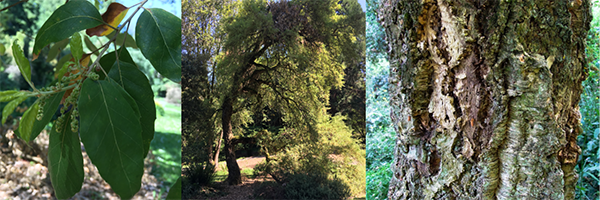
All About Cork Oak


Each month the UW Botanic Gardens' Newsletter, E-Flora, posts in detail about a specific plant, among many other interesting posts about events and general information.

This month's feature is about Cork Oak, found at the nearby Arboretum. 


Here is the posting:


Thursday, June 6, 2019

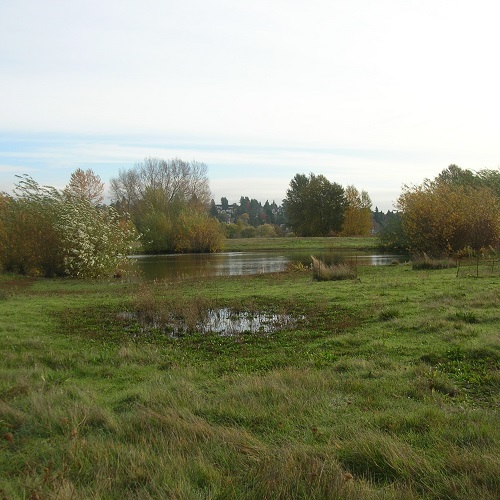
Tomorrow Restoration Work Party at Union Bay Natural Area


Restoration Work Party: Union Bay Natural Area


Tomorrow from10-1pm, there is a Restoration Work Party at Union Bay Natural Area.

The information says:

Spring has caused an explosion of growth in the Union Bay Natural Area, and of course, that includes the invasive species at our restoration project sites! Come help to remove new sprouts and maintain our restoration efforts.  
Everyone is welcome and no experience is needed. Gloves, and tools are provided for all volunteers! Remember to bring water and wear sturdy shoes and clothes that can get dirty. We will work, rain or shine. 
Meet at the tool cage behind Merrill Hall at the Center for Urban Horticulture. 
The Union Bay Natural Area is managed by UW Botanic Gardens to maintain and enhance plants, wildlife and landscape values while serving as an outdoor laboratory for research, teaching and public service.

Tuesday, May 21, 2019

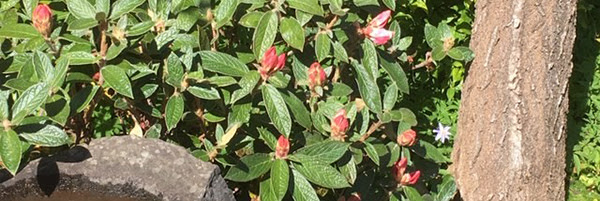
UW Gardens May Plant Profile: Rhododendron


Each month the UW Botanic Gardens' Newsletter, E-Flora, posts in detail about a specific plant, among many other interesting posts about events and general information.

This month's feature is about the rhododendron, which can be found at nearby Center For Urban Horticulture. 
   

Here is the posting:


Thursday, April 25, 2019

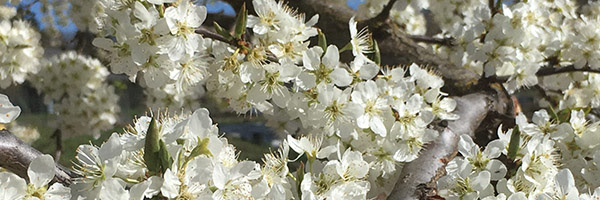
April 2019 Plant Profile: Japanese Plum At Center For Urban Horticulture


Each month the UW Botanic Gardens' Newsletter, E-Flora, posts in detail about a specific plant, among many other interesting posts about events and general information.

This month's feature is about the Japanese Plum, which can be found at nearby Center For Urban Horticulture. 
   

Here is the posting:


Monday, March 18, 2019

All About Recent Barred Owl Sightings

Here is a recent post from the Union Bay Watch Blog published by Larry Hubbell, long-time local photographer and birder.

Here also is an in-depth article about Larry and his work.


A Quizzical Look 


The crisp, cold chill of the morning air cleared the cobwebs from my mind. When I am out and about, I imagine myself fully alert to the wildlife around me. However, I suspect that even at my best, I still miss more than I see. For example, while walking south through the Arboretum, during the early morning, I had no idea there was an owl hunting among the bushes in front of me. I was certainly surprised by the silent flurry of wings when the Barred Owl rose up from the ground and landed on a small branch.

The owl glanced at me and then resumed searching the surrounding trees. The owl's lack of interest in me seemed to imply that I was, 'Too big to eat and too noisy to be dangerous.'

My own thoughts were equal parts - excitement and relief. For many winters, I have been able to check-in on one of the Barred Owls on a daily basis. At some point, I had become aware of one of the resident owls' winter roost. A shaded, horizontal branch deep within a stand of Western Red Cedars was a consistently used spot where the owl silently snoozed through the daylight hours. 

Sadly for me, for the last two winters, the owl has apparently found a new resting location. I no longer have a clue where the owl takes its siestas. 

As a matter of fact, until I heard a Barred Owl calling just last week, the only owl I had seen in the Arboretum this year was this Great Horned Owl. Since Great Horned Owls are quite capable of eating smaller owls, seeing one always makes me a bit concerned for our resident Barred Owls. 

It was certainly a warm feeling of relief to see this healthy-looking Barred Owl going about its business. It reassured me that we still have a good chance of seeing young owlets later this year.

At this point, the owl seemed to be evaluating my daughter's dog, Ginger. The owl's apparent conclusion was, 'Smaller than the human, but still too big to catch and carry.'

Later, while looking at this photo, I was struck by the subtle asymmetry in the owl's facial disk. The disk is the area outlined by the dark brown stripe which surrounds the eyes and beak. This concave, saucer-shape helps Barred Owls to funnel sounds to their ears. Their specialized hearing complements their night vision and their exceptionally silent flight to make them superb nocturnal hunters.

I enjoy trying to identify the individual creatures which live and reside around Union Bay. I have not had much luck with the Barred Owls. So, as I looked at this photo I wondered, Could the elevated dark brown 'eyebrow' above the bird's right eye enable consistent identification? Is this quizzical look unique to this individual?

I began searching my database for Barred Owl photos. A found this 2014 photo which shows the brown stripe on the right side of this owl's face was also higher than the stripe on the left.

Among the 2015 photos, I found a picture of a hatch-year bird with the same facial arrangement.

When I looked closely at an adult photo, in the same year, the pattern repeated.

In 2016 I found the same quizzical look. Potentially, all of these adult photos could be of the same bird, since the pictures were taken in the Arboretum. However, it does seem unlikely that I might have repeatedly photographed only one of a pair of reproducing adults.

Plus, I know that in the case of hatch-year birds the comparison from one year to the next must be of different individuals. So, this 2016 hatch-year photo represents at least the third Barred Owl with the same type of asymmetry.

In addition, this photo shows two different young in that year, so that increases my tally to at least four different individuals.

I also found a 2017 photograph which displayed a Barred Owl with a similar pattern. 

Finally, here is a Barred Owl photographed last year in Interlaken Park which shows a similar facial arrangement. This repetitive pattern implies to me that, as a species, Barred Owls have asymmetrical facial disks. Not only am I unable to use this feature to identify an individual adult, but I find it incredibly humorous and humbling that I have photographed these birds for years without being conscious of this consistently quizzical look.

The obvious next question was, Why are their faces asymmetrical? I remember Dennis Paulson teaching us, in our Master Birder Class, that some owls have asymmetrical ear alignments. With ears at different heights, owls can determine more precisely both the vertical and horizontal location of their prey. 

I did not remember whether the ears of Barred Owls ears were aligned symmetrically or not. Looking online, I found the following posting regarding:


from The International Owl Center, in Minnesota, which confirmed some asymmetry in Barred Owl ear locations. (If you follow the link above, you can then scroll down to the third photo to read about the Barred Owl ears.) My best guess is that Barred Owl's asymmetrical faces are a functional reflection of and correlation with their ears being at different heights.

After another internet search, I found a post which gives even more details about owls and their specialized hearing. Plus, the commentary gives me the impression that the author shares my belief that the asymmetrical shape of Barred Owl faces is related to the location of their ears. 


I doubt that I will ever look at a Barred Owl again, without smiling at their oddly quizzical look.


Wood Duck Update:

In a perfect follow up to last week's post, my friend David G Olsen, sent in his photo of female Wood Duck inspecting Box #9 on the south side of Union Bay. This March 2nd photo is our first recorded box inspection by a Wood Duck in 2019. The hen is clearly intent on kicking off the 2019 breeding season. Way to go, David! Thank you!

Additional signs of Spring, seen this week, include Mallards mating and Bald Eagles and Crows gathering sticks for their respective nests. 


What type of tree produces this cone? Is the tree native to Union Bay?


Western Red Cedar: Yes. It is native to Union Bay and the western side of the Cascades.