Showing posts with label Center for urban horticulture. Show all posts

Friday, May 13, 2022

Center For Urban Horticulture Class


On Saturday, UW Botanic Gardens’ Center for Urban Horticulture (3501 NE 41st Street) is holding an in-person class on plant diagnoses from 9:30-12:30pm. The cost is $35.


Here is the class information:


Plant CSI: Diagnosing Plant Problems in the Spring Landscape 

The sun is out, leaves are opening on your trees and shrubs, and the garden is calling you. Spring is a good time to look for disease, insect pest and stress issues before they do too much damage or become too difficult to manage. Learn how to recognize plant problems typically found in the spring as we walk through a variety of plant collections in the Washington Park Arboretum.

Please join us for the first class in the Seasonal Plant Diagnostic Walk series! These are hands on classes that will cover how to diagnose common plant problems, including how to scout and monitor for diseases and insect pests, how to recognize what is not normal for a plant, and what kind of management plan will work best for the issue. Join us in the UWBG Washington Park Arboretum and learn skills to help you keep your garden plants healthy and thriving.


For more information go here.

Thursday, March 24, 2022

Increase In Traffic Saturday Near CUH Due To Marathons


The annual Seattle Cherry Blossom Run is happening on Saturday and Sunday at the UW.

The event coordinator would like to let the community know that traffic around the
UW Center for Urban Horticulture could get busy on Saturday between 1-7pm as it is being used as the packet pick up location.

The cherry blossoms in the Quad at the UW are supposed to reach peak bloom this weekend. According to this UW article, "peak bloom is when at least 70 percent of the blossoms have emerged."

The UW information says:

The 29 large cherry trees in the Quad are about 86 years old and healthy. A number of other cherry trees live across campus, but the species in the Quad, “Somei-yoshino,” usually blooms before the others each season. Each species has its own typical bloom time.

The amount of daylight and favorable temperatures are the two most important factors that determine bloom timing, said Sara Shores, UW arborist. If it stays cool, with little rain or wind, the blossoms could stay on the trees for as long as two or three weeks.


For more information about the race go here.

Wednesday, November 3, 2021

This Month's Center for Urban Horticulture Classes


UW Botanic Gardens’ Center for Urban Horticulture (3501 NE 41st Street) is holding several on-line classes this month.

Here is the information:


Plant CSI: What's Wrong with my Conifer?  Thursday, November 4, 12:30 – 2:15pm, $35 

Learn about key plant diseases and insect pests that can cause problems for favorite trees and shrubs in the landscape.

There are a number of common insect pests, diseases and abiotic problems that impact the health of both native and landscape conifers in our region. This course will help you identify common conifer diseases and insect pests including rusts, twig and needle blights, needle casts, adelgids, and moths. Abiotic stresses will also be discussed. Plant Health Care (PHC) approaches to management, including Integrated Pest Management (IPM) methods will be covered.

Instructor: Bess Bronstein


Plant CSI: What's Wrong with my Conifer? (online)


Native Plant Selection & Installation - Tuesday, November 9, 11am, $35 

This class will cover how to select and place native plants in different types of restoration and naturalized settings, as well as how to effectively incorporate native plants in home and public landscape designs. Species succession and diversity, as well as improving long-term environmental functions, sustainability, and aesthetics using native species will be emphasized, as well as how to plant trail and landscape edges for optimal habitat functions and reduced demands for clearance pruning.


Native Plant Selection & Installation (online)


Native Plants 101: Pollinator Pathways  - Monday, November 15, 6:30 – 8pm, $20 

Learn about some of the challenges native pollinators face, and ways to create spaces for them to find food, shelter, and a place to nest.  Basic pollinator information and  Western Washington’s native plants you can grow in your yard to help provide habitat for our pollinators, will be discussed.

Instructor: Mary-Margaret Greene


Native Plants 101: Pollinator Pathways (online)


What's Wrong with My Houseplant? Wednesday, November 17, 7 – 8pm, $15 

Instructor Tassy de Give, co-author of Rooted in Design and Plant Director of Glasswing Greenhouse and Geometry Gardens, will discuss the normal life cycle of plants: what is acceptable leaf loss, how to identify and treat plant pathogens, common houseplant pests, and watering or lighting issues.


What's Wrong with My Houseplant? (online)


Tuesday, October 5, 2021

Tomorrow How To Grow Houseplants

 Nearby UW Botanic Gardens’ Center for Urban Horticulture (3501 NE 41st Street) is holding house plant growing on-line tomorrow evening at 8pm. The cost is $15. . 

Register online or by phone at 206-685-8033.

              Houseplants 101: The Art of Growing Plants Indoors (online)

Here is the class description:


Houseplants 101: The Art of Growing Plants Indoors

Learn the do's and don'ts of indoor plants. Instructor Tassy de Give, author of Rooted in Design, will discuss how to choose the right plant for your indoor environment and troubleshoot potential plant problems. Whether you are a first time plant owner, or are looking to expand your knowledge of your existing collection, Houseplants 101 will give you the know-how and guidance for improving the life of your plants. Environmental factors, plant identification, and general care techniques will be discussed. The virtual lecture will also include an in-depth Q&A section so be sure to bring any plant questions as well as plants you want identified.  


Go here for more information.


Friday, October 1, 2021

All About Osprey Flying Around Union Bay Natural Area


Here is a recent post from the Union Bay Watch Blog published by Larry Hubbell, long-time local photographer and birder.


Mystified

Last week, I saw this full-sized Osprey circling over the water next to the Union Bay Natural Area. To catch the fish, that they love, Osprey dive headfirst - as deep as three feet. So, patrolling the shallow water along the shore makes sense. Plants grow well next to the water. Insects find food in the lush foliage and occasionally fall. Struggling insects attract fish to the surface, which makes the fish easy targets for the Ospreys. 

The faint thin "necklace" of brown indicated this Osprey was most likely a female. The nearly perfect symmetry and the virtually pristine state of its feathers made me suspect it was a first-year bird.
 
To the west, on a light pole above the UW baseball field, I could hear and barely see another Osprey. The solid darkness of its outer wing confirmed this was a mature bird.

When the first Osprey passed near the light pole, I noted that the two birds accepted each other's presence without incident. I also saw the small rows of white edging, momentarily visible on the top of the flying bird's wings. This helped to confirm it was a first-year bird.

It seemed likely that these two were family members and most likely from the nest just to the north.

In April, I saw an Osprey stop to eat a fish at the nest above IMA Field 3. March and April are when most Ospreys return to Washington. They are no doubt hungry after flying 2000 miles from their wintering waters in Mexico.

For the third year in a row, Ospreys have nested and raised young on this light pole. Click Here to see last year's photos.

In July, I caught a few photos of the female (most likely Hope) and her two young - while they were still in the nest. The second young bird is mostly hidden by the sticks on the right.

If we zoom into the photo we can see the different colors of their irises'. The adult's irises are yellow while the young's are orange. This would be impossible to see with the naked eye, at least for me. 

I find it mysterious that Cooper's Hawks eyes shift from very pale to orange to red with age, while Osprey's go from orange to yellow as they mature. Almost everything in nature seems to exist for a reason. 

Do their lighter eyes help mature Osprey to see fish in the water? Do darker eyes help the adult Cooper's Hawks find food in the forest? If both of these happened to be true then why not start out with eyes of the optimal color? Could it be that the color changes exist to indicate their youth to other more mature birds? However, in both cases, there are much more obvious signs of their youth.

For example, an hour later, I observed this young Cooper's Hawk. Its youth is very clearly indicated by the vertical stripes on its chest.

Shortly thereafter a mature Cooper's Hawk arrived, with the obviously different horizontal barring on the chest.

This 2016 photo clearly displays the difference between the adult Osprey's purely dark outer feathering and its young offspring whose dark outer feathers were tipped with white edges. The subtlety of the iris color differences seems redundant. I suspect there may be something more that we do not know.

In this particular case, the iris color difference is almost impossible to see. Why? Since the young bird was flapping its wings, I suspect both birds involuntarily covered their irises with their nictitating membranes. These are partially translucent coverings that protect their eyes in moments when they might be easily damaged. These membranes also reduce our perception of their eye colors.

I find the mysteries and adaptations of nature are wonderfully enthralling and mystifying. Here is another example.

Just before seeing the Cooper's Hawks, I noticed this Coyote patrolling the shore of the Central Pond in the Union Bay Natural Area.

For a moment it started to explore the underbrush.

Immediately, the young Cooper's Hawk abandoned its hunting and flew up to an overhead branch.

The hawk circled around a few more times apparently agitated by the Coyote intrusion.

It finally settled down once again, but it stayed in the treetops.

Below, a second Coyote passed by. 

I have always thought of Coyotes as being fairly similar in their markings. Apparently, that is not totally true. Did you notice any differences between the two?

The first Coyote had a dark tip on its tail.

The second had a white tip. This seems unlikely to be a functional signal of youth due to the location. Perhaps, it is just a random mutation with no impact on the survival of the individuals. A Google search of images shows neither white nor black is unusual on a Coyote's tail. 

Rather than a sign of youth, maybe the whitetail on the Coyote is actually a sign of age? With humans and even dogs, white hair on the face or head is a clearly visible sign of age. Still, white on the tip of the tail would generally be hidden during a confrontation and so it would seem to be of little value. Actually, it might even be counter-productive for a Coyote to signal its advancing age.

On the other hand, if the color of an animal's tail has no impact on survival why do we have a species of White-tailed Deer and another nearby species of Black-tailed Deer in the Pacific Northwest?

Slightly to the south a young Green Heron, hunted and preened, seemingly obvious to the passing Coyotes and the flights of the young Cooper's Hawk.

Young Green Herons have little white triangles on their feathering which disappear as they mature. By the way, I believe August and September are the optimal months for seeing Green Herons on Union Bay. I recommend bringing binoculars and closely examining the lily pads.

Surprisingly, the young Cooper's Hawk flew almost directly in my direction. I have learned to look for anything that might explain sudden changes in behavior.

I turned and looked in the direction of the hawk's flight. A perched Merlin seemed to be its likely focus. In this photo, I believe the Merlin was in turn focused on another bird that was passing overhead.

Soon the approach of the Cooper's Hawk caught the Merlin's attention.

Momentarily, the Merlin abandoned the tree. However, it soon returned. For a time, both birds sat in the tree. This was interspersed with moments when the two chased each other out over the water. Their interaction seemed almost playful.

I did catch this photo of the young Cooper's Hawk apparently trying to intimidate the Merlin. On average Cooper's Hawks weigh about twice as much as Merlins. However, Merlins belong to the Falcon family and I suspect they can fly circles around Cooper's Hawks.

Shortly, thereafter the adult Cooper's Hawk showed up and the Merlin abandoned its "playtime". My first thought was that the adult hawk was one of the parents from the nearby Cooper's Hawk nest - checking up on its young.

However, a closeup of the bird's leg revealed, unlike the local adult Cooper's Hawks, this bird was unbanded. Since it was not a parent of the young hawk, I wondered why had it approached the other two birds? Why did it come and sit in the same tree? Was it looking for food? 


What are the four species of plants in front of this tree trunk? Is each native to Union Bay?


Starting right in the middle of the trunk:

    Low Oregon Grape - Mahonia nervosa

Up and to the left:

   Beaked Hazelnut - Corylus cornuta

Up and to the right:

    Indian Plum - Oemleria cerasiformis

Down and to the right:

    Salal - Gaultheria shallow

These plants are all native to Union Bay and the Pacific Northwest. As is the tree:

    Western Red Cedar - Thuja plicate

Thursday, September 23, 2021

Nearby Center For Urban Horticulture's Miller Library Re-Opens

 VIRTUAL An Apple for the Teacher Story Time


Nearby Miller library, located at the UW Botanic Gardens’ Center for Urban Horticulture (3501 NE 41st Street) has recently re-opened from Mondays to Saturdays. 

The children's Story Time program is still virtual. 

This month's theme is "An Apple for the Teacher."

The information says:
What brings you joy this summer? For the characters in these books, it might be feasting on a picnic, wishing on a dandelion, or taking a hike.
Books that are read:
FLORETTE by Anna Walker
APPLE PIE ABC by Alison Murray
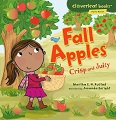
FALL APPLES: CRISP AND JUICY by Martha E. H. Rustad and Amanda Enright

Story time is geared towards children ages 3 to 8 and celebrates gardens, plants and nature.  Go here for more information.

UW Botanic Gardens’ Center for Urban Horticulture started in 1980. Here is some information from the website:

In those divisive times of the late 1960’s and 1970’s, many new ideas began to form regarding how to live on, properly use, and safeguard the resources on our earth. This included groups from the “flower children” to academics. Learned horticulturists, botanists, and academics in the Northwest created a plan which called for the creation of a new academic unit at the University of Washington to be called the Center for Urban Horticulture. It would be different from traditional production horticulture which had been taught for hundreds of years.   Instead it would bring disciplines together which seldom or never interacted.

The Center for Urban Horticulture, the first of its kind in the world, and thereafter copied around the world, officially began its life when Professor Harold B. Tukey, Jr, from Cornell University arrived as its founding director in May 1980. Dr. Tukey’s family, including father and brothers, were well known in the horticulture academic arena. He first worked along with an administrator, Sally Dickman, in an office in Anderson Hall on the UW campus. He also was UW director of the Washington Park Arboretum and directed that staff, headed by Joseph A. Witt, curator. In 1981, two new faculty arrived: myself, John A. Wott, from Purdue University in April, and James A. Clark, from Rutgers University in June.

The initial promise of full state funds soon evaporated as the State of Washington rapidly slipped into a recession and all hope of state funds for building and future program building was futile. Never daunted, Dr. Tukey, aided by the good will of Provost George Beckman (who did provide what seed money he could), along with community horticulture stalwarts such as Elisabeth Carey (Betty) Miller began a campaign to raise the millions of dollars needed privately. As you now see today, they were successful. CUH, now a part of the University of Washington Botanic Gardens, is an invaluable resource in the Northwest as well as nationally and internationally.


Go here for more information.

Tuesday, September 21, 2021

All About Barred Owls


Here is a recent post from the Union Bay Watch Blog published by Larry Hubbell, long-time local photographer and birder.


Poison in the Pond

Thursday morning, this Barred Owl stretched its wing on a branch overlooking a silent seep of water in the freshly revitalized Rhododendron Glen. I was a bit surprised to see such extensive molting of the feathers on its head. It is the right time of year for molting, but I would have expected that only first-year birds would replace so many feathers all at once.

Although Barred Owls usually hunt at night they can become instantly alert during the day. I suspect the younger and less-skilled owls are more likely to still be hungry after sunrise. Given this owl's position above the moisture and its level of alertness, I assumed it was still hunting and hoping for food.

Barred Owls are carnivores. They will eat a surprising variety of creatures. During daylight, they will most often sit and doze close to the trunk of a coniferous tree. If an enticing sound reaches their ears they are likely to open at least one eye to evaluate the situation. If it looks promising, they may silently stretch before dropping from the overhanging branch. Silence and surprise are critical skills for a Barred Owl. They even have specialized feathers that help mask the sound of their approach.

They primarily hunt in forested areas. However, they prefer an open understory below a protective canopy. (Bald Eagles, Great Horned Owls, and Common Ravens will eat or compete with Barred Owls.) 

Even among the trees, Barred Owls require space to spread their wings. Their mature wingspans are normally greater than three feet. They are especially fond of hanging out near water since all of their favorite foods like to drink.

Barred Owls do not participate in annual migrations but our local owls are the offspring of immigrants. Originally, Barred Owls were primarily found east of the Mississippi, as generations passed they slowly moved west via Canadian forests and then south through the Cascades. Click Here to see a dynamic display of their annual sightings. I suspect the limited summer movement may be primarily due to younger birds looking for mates.

They are territorial. A pair of mated birds will have overlapping territories. The overlap is nearly 100% during the breeding season and potentially half that during the winter.
 
After being chased by crows, the mate of the owl above moved from this perch into the dense shadows of a Western Red Cedar. Curiously, the feathers on the head of this owl showed no signs of molting. The variation between the two made me wonder if the first owl might still be somewhat immature - perhaps in its second year?

In any case, when I looked closely at the trailing edge of the primary wing feathers of the first owl, I could see evidence of wear. This reinforced the idea that this owl was more than a few months old and most likely it did not hatch out this year. 

Also, I saw a pair of Barred Owls in this same area this Spring. Normally one of a mature pair would have been in a nest on eggs at that time of year. This memory also strengthens the idea that one of these owls might be old enough to find a mate but not yet ready for family life.

The owl occasionally attempted to doze. 

I love the feathered eyelids. Barred Owls are capable of surviving temperatures far below those they encounter around the Salish Sea.

Soon, a hummingbird spotted the owl and began diving back and forth above its head. When the hummer stopped to rest for a moment, further out on the same limb, I finally caught a photo.

Our hero immediately awoke and moved closer to the hummingbird.

I suspect the intensity of its focus may have been correlated to its level of hunger.

The owl watched the hummer from the beginning of each dive...

...all the way through to the end. In my experience, most mature owls usually ignore hummingbirds.

Ultimately, the owl coughed up a pellet, the remains of its last meal, and flew to a more secluded and protected branch - just below its mate.

Earlier in August, some friends and I spotted a Barred Owl about one hundred yards to the north. Given the lack of molting feathers on its head, I suspect it was the mate of our hero.

It also snoozed for a time. Then suddenly, it dove from its perch and into the Salal. 

There was a considerable amount of scurrying but the owl came up empty.

Both the Barred Owl and I could hear the rapid calls of a Douglas Squirrel overhead on the branch of a Western Red Cedar. The owl moved closer but apparently realized that without the element of surprise there was little point in chasing the speedy squirrel.

The Douglas Squirrel, unlike most other small creatures, did not run and hide. It did the opposite. It spent approximately 10 minutes verbally abusing the Barred Owl. I could not comprehend the "words", however, the gist of the message was pretty obvious. It was scolding the owl for being rude. It may have mentioned being slow and unskilled as well. Perhaps it finished by advising the owl to take its appetite elsewhere.

A few days before, I spotted a Barred Owl staring into the lower Woodland Garden pond. It was early in the morning and we were undisturbed. Abruptly, the owl descended towards the water - much faster than I could react. There was a very brief splash, hidden behind a bush, and then the owl rose up to a branch on the far side of the pond. Briefly, I saw the shadow of a wiggling shape - trying to escape its talons.

In the past I have seen an occasional non-native goldfish, a non-native bullfrog, and native Northwestern Salamanders in the Woodland Ponds. Many times I have seen the Barred Owls hovering just above the water's surface but never before had I seen them catch anything.

By the way, please do not put non-native lifeforms in our waters - the native creatures already have more than enough imported competition.

Speaking of things a Barred Owl will eat:

About a week before the pond encounter, one of the Gardeners pointed out a Barred Owl eating a good-sized rabbit in the southern part of the Arboretum. When eating larger creatures, Barred Owls always start at the top. 

Apparently, an American Crow is large enough to require the head-down approach as well. Click Here to read a post about a young owlet getting to eat crow.

Rats are probably their most common meal and approached the same way. Click Here to read about the more effective alternatives to rat poison.

If the creature is small a Barred Owl will simply swallow it whole. Later, they regurgitate the inedible parts and leave a pellet of fur and bone to fertilize their surroundings. Click Here to read about a young owlet's early hunting success.

Barred Owls will even feed worms to their young. I suspect in the case of worms they do not distinguish between the head and the tail. However, it was not a worm that the Barred Owl pulled from the Woodland Garden pond.

The Barred Owl tossed its head back and swallowed the mature native Northwestern Salamander in a single gulp. These native salamanders exude a poison that helps protect them from some predators. It does not appear to be effective with the Barred Owls.